
beauty, or at least style.
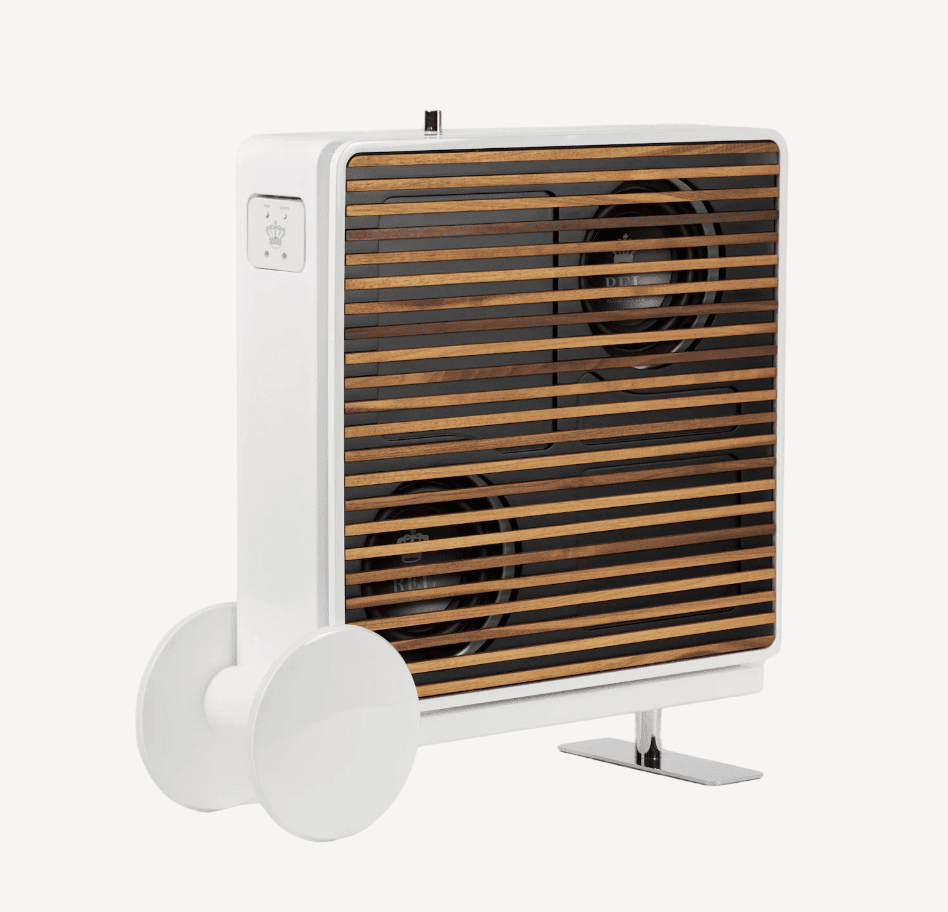
Thursday morning, 7:15 am. I step out onto my front porch, camera gear and a cup of coffee in my hand.
My buddy Josh was in his car, waiting outside to pick me up...
We were heading down to our Arrington Woods project to shoot some video.
The house is finally to the point where it looks pretty good, at least from the exterior. It's time to let the world know and sell this project.
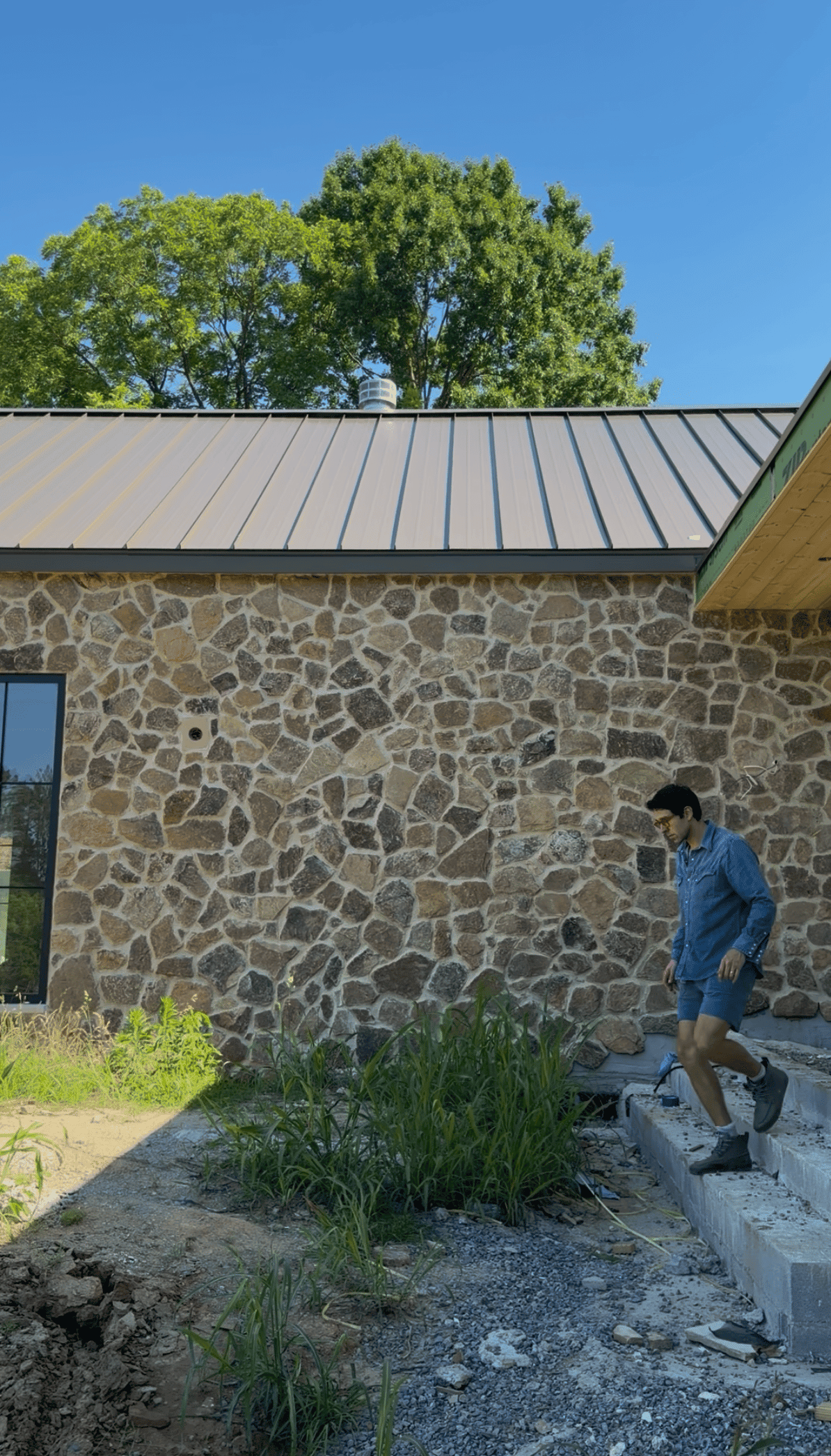
Coming down the steps of the front entrance
We got to chatting about how buildings look. And how cars look. And why does it seem like everything looks worse now than it did 50+ years ago?
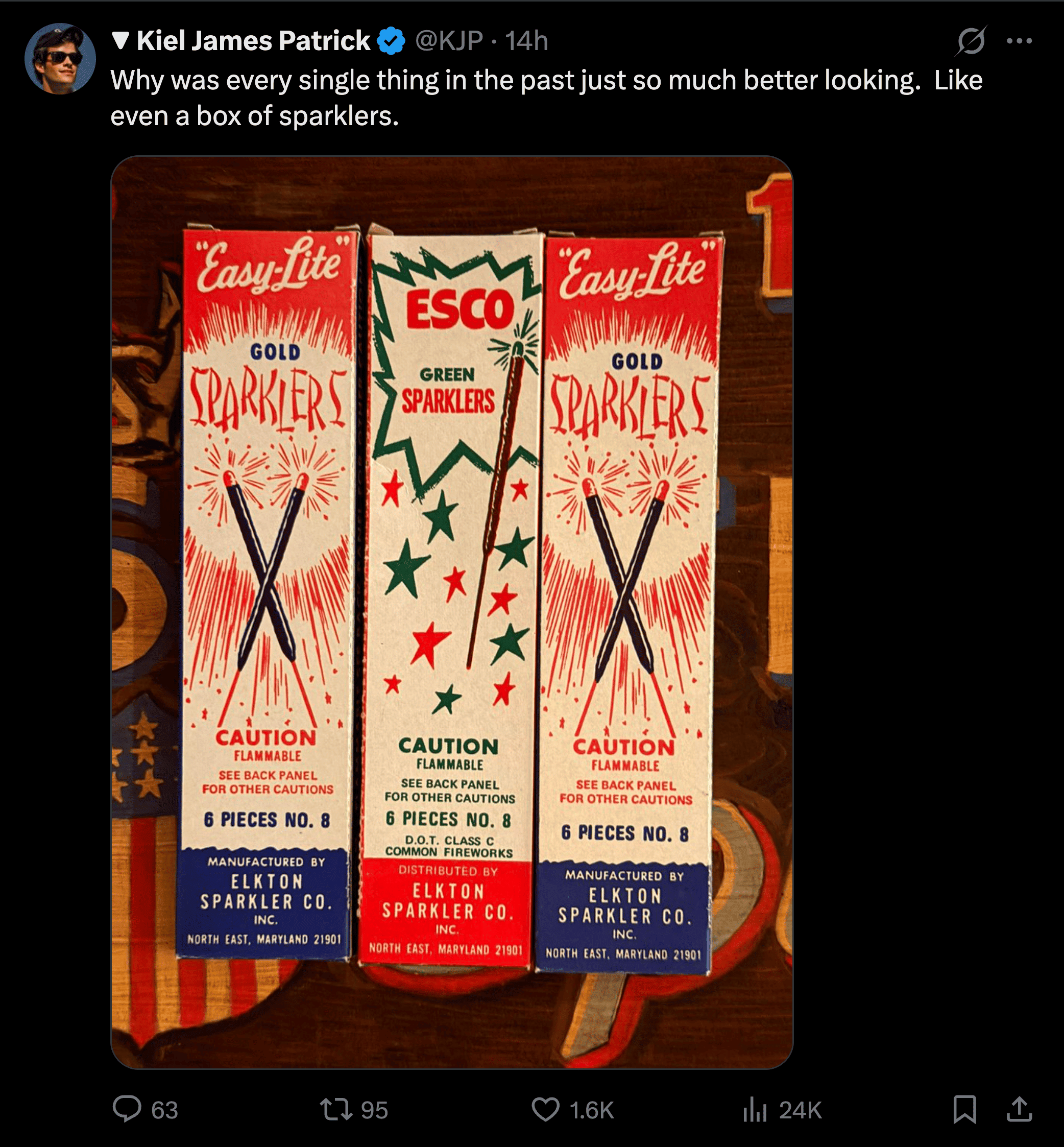
Great account, I really resonate with this
Josh was pointing at the other side of the road as we were on the highway.
There's no car that drives by that inspires any sort of envy or swoon. Everything is kind of an aerodynamic, overengineered, shapeless mush of a crossover SUV. A sea of sameness.

Cars are undeniably functionally better in virtually every way. Safety, efficiency, reliability, comfort. Etc etc. And yet they are also undeniably uglier and lacking personality.
Buildings and homes are much better in many ways. And yet, unless you have a good-sized budget, as we do for this home, an entry-level average home is significantly uglier than its counterpart from 50-100 years ago.
If you don't believe me, when was the last time you walked through a mostly original 1000sf 2/1 brick Tudor Home from 1930's or 40's?
What large building has been built recently that is actually beautiful or exciting? What is the version of the Sydney Opera House or Chrysler Building today?
We have a lot of shiny new buildings in most downtowns, but is there anything truly special or interesting about them? Will anything being built today be worth preserving in 50 years?
Why is this?
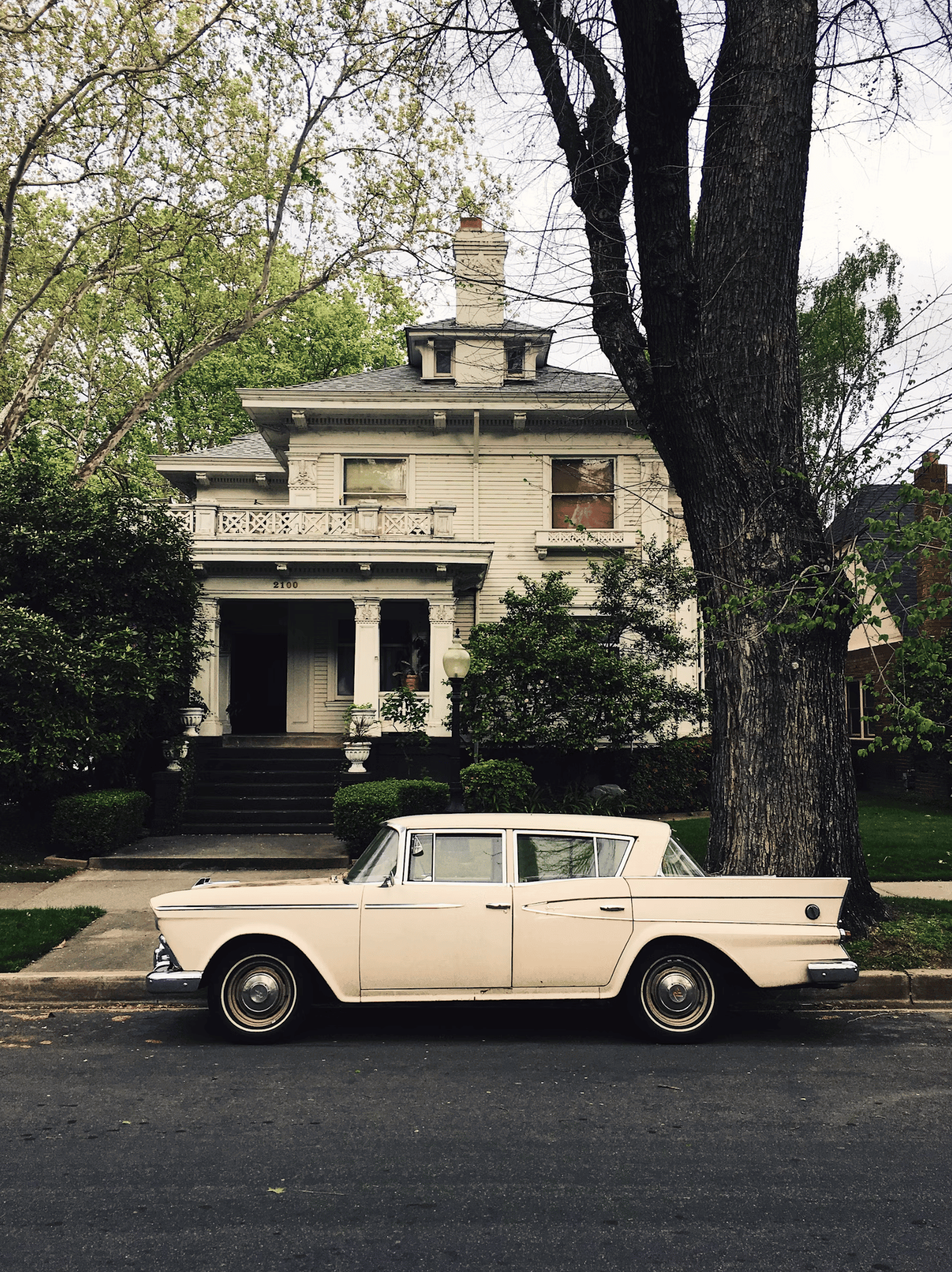
No contest
It's a really popular question on the internet, and I think there are a lot of macro reasons, not least of which are: an absence of collective values, a shift from technological optimism to technological pessimism, a prioritization of the short term over the long term, and a transition from a domestic economy to a global one.
One of the things I've become increasingly cognizant of as I've gotten older and taken on more responsibility is that anytime you make a choice, you're choosing a set of problems.
There's no free lunch. You're never choosing between no problems and having problems, but rather which problems you would prefer to address.
In so many ways, as a society, we've chosen the problem of cheap, fast convenience over the problem of aesthetics. The Amazon Vibe over the Downtown Department Store Vibe.
I generally believe that there was a certain cultural vibe, a shared stylistic pride, that was much more present in the past than it is today, and I want to double-click on this.
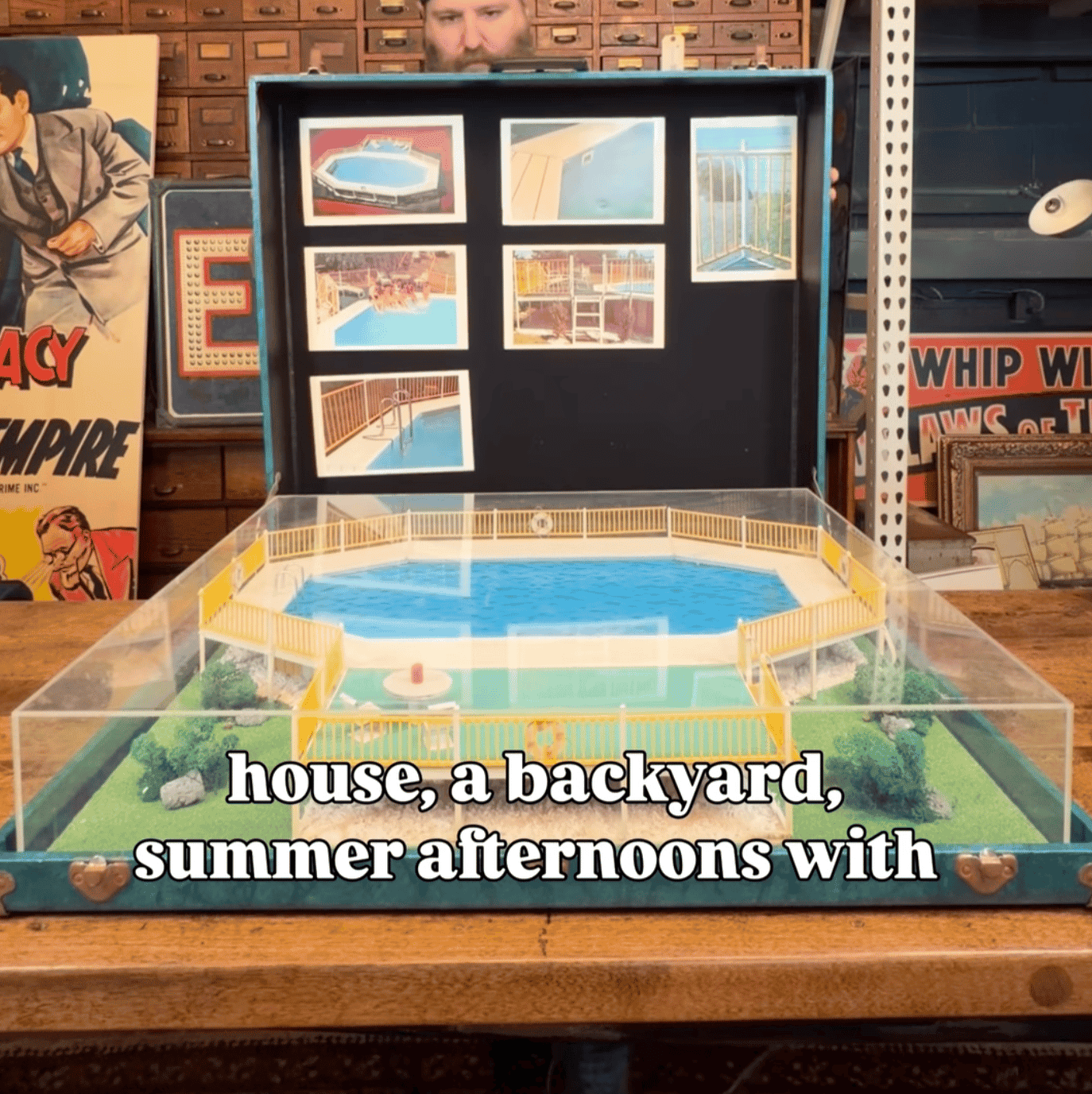
I loved this video, a demonstration suitcase for an Esther Williams Pool Salesman from the 1950s.
If you think about the mid-century period, 1940s-1970s, it gets interesting. For the record, I love mid-century architecture (specifically, the Case Study Homes and the Horace Gifford Fire Island Pines stuff. That's what really got me excited about homes and architecture in the beginning)
BUT, I also think a fair description of mid-century architecture is that it's more interesting than it is beautiful. Mid-century modern, in many ways, is about cultivating a specific vibe. Its primary focus is style, not necessarily beauty.
The Eames House has an immaculate feel. It's not at all because it's the most beautiful building. It makes you feel a specific way, unlike other homes. To describe it as beautiful is to describe it inaccurately. I don't think that's what they're trying to do.
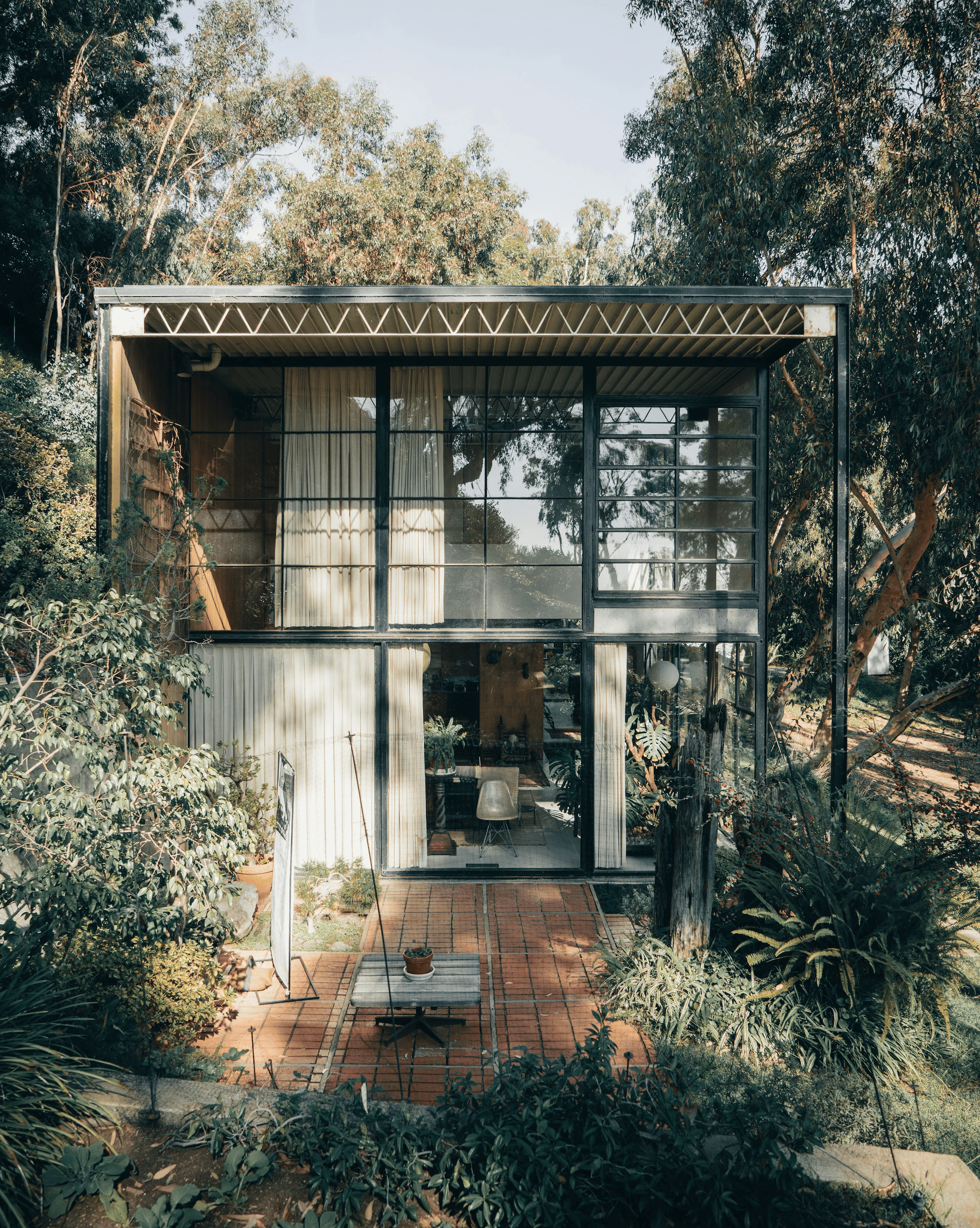
They were trying to make a house that felt totally different from other homes. They were trying to cultivate a vibe.
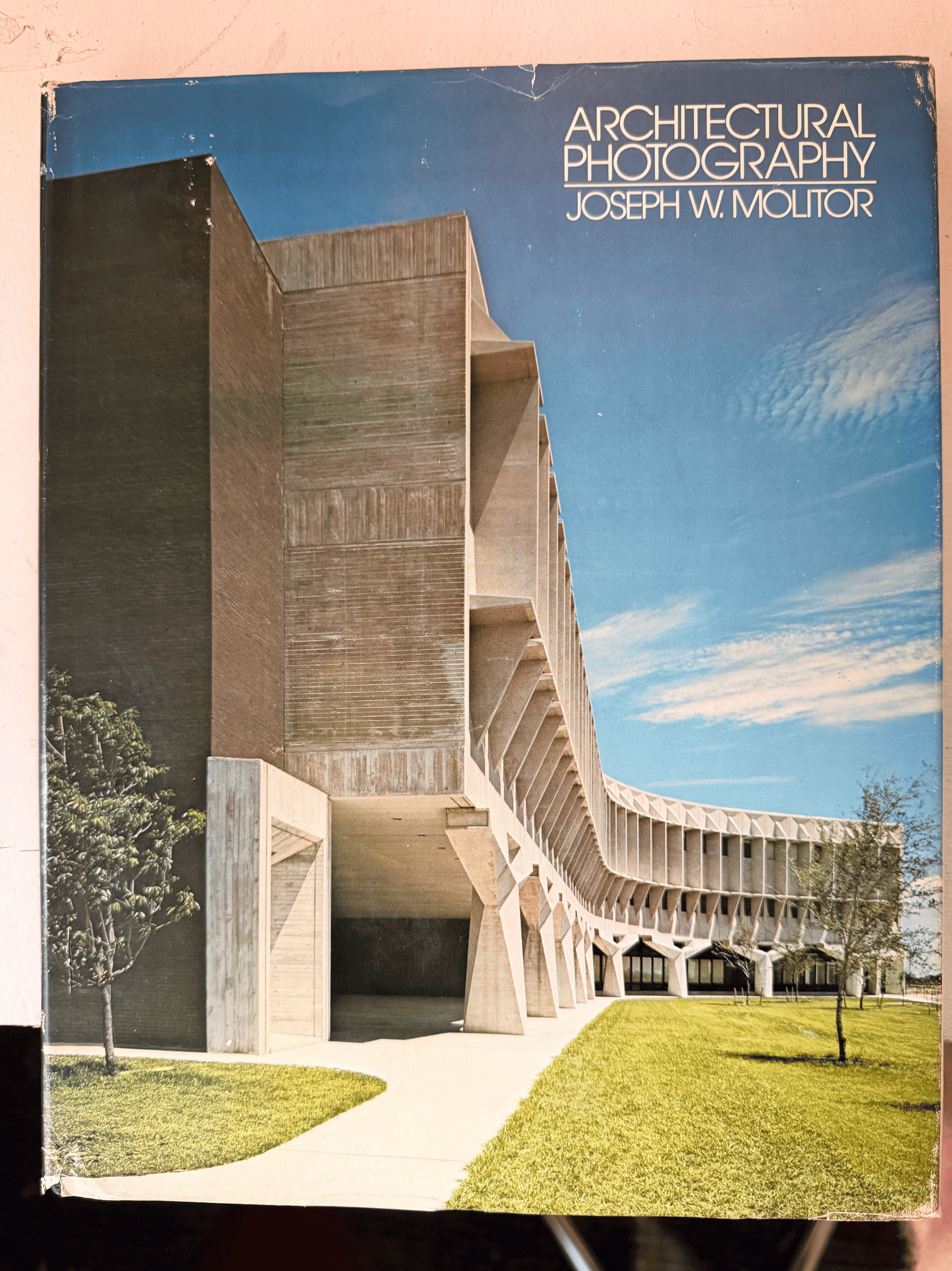
I got this book, Architectural Photography by Joseph W. Molitor, at a vintage bookstore. It was published in 1976 and features a ton of mid-century and brutalist commercial and public buildings.
When we walk through the interiors of these buildings today, they've been redone a couple of times. But photographed in their virgin state, memorialized with the original red, orange, or olive carpet, original tubular steel Bauhaus furniture, and original tube spotlighting, we get to see them presented as one unified vision, where the interiors match the exterior and cultivate a cohesive vibe.
They are brimming with optimism and style.
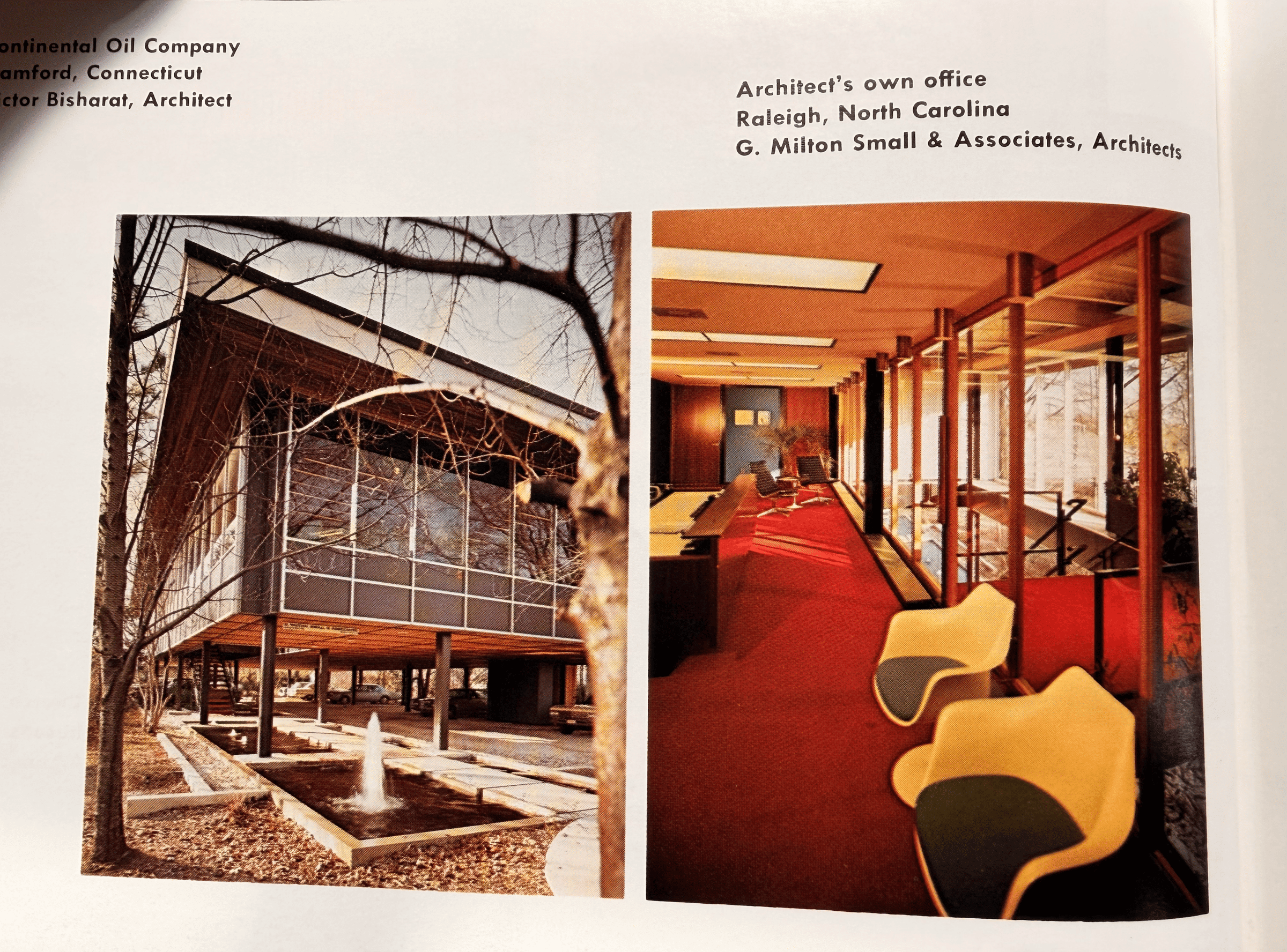
from pages of Architectural Photography by Joseph W. Molitor
Today, we typically get neither style nor beauty. We instead get either function or "luxury," both of which are really just a bad rebrand of mostly commodity homes, buildings, and products.
A refrigerator from the 1960's had unquestionable style. Would you call it beautiful? Maybe, but you would certainly say it had a happy, optimistic vibe.
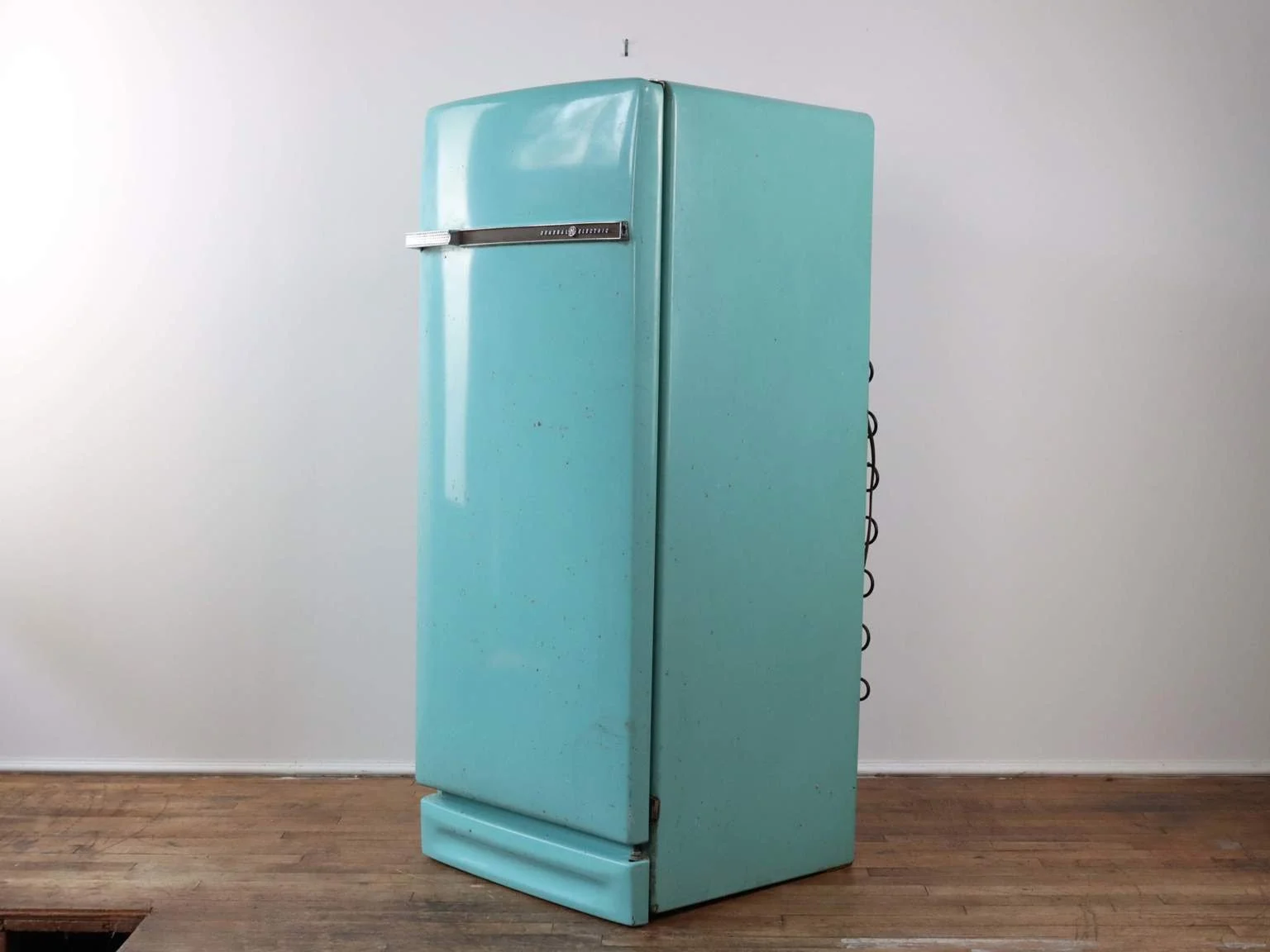
via Modern Day Bids
I'm not sure when that all ended, but I can tell you with certainty that an equivalent is not available at Home Depot today. I think that's crazy.
Yet, it's also a generational opportunity. You don't have to build for everyone. You just have to build something worth caring about, and the internet will find your people for you.
People are so hungry today for things with beauty, or at least a little style and soul.
That's what we tried to do at Arrington Woods. A low, elegant, mid-century inspired courtyard home — mostly one story, organic materials, natural texture, built around a lush courtyard. Not revolutionary. Just something with soul that wasn't available on the market today.
So far, it's looking really good, both in terms of style and spreadsheet.
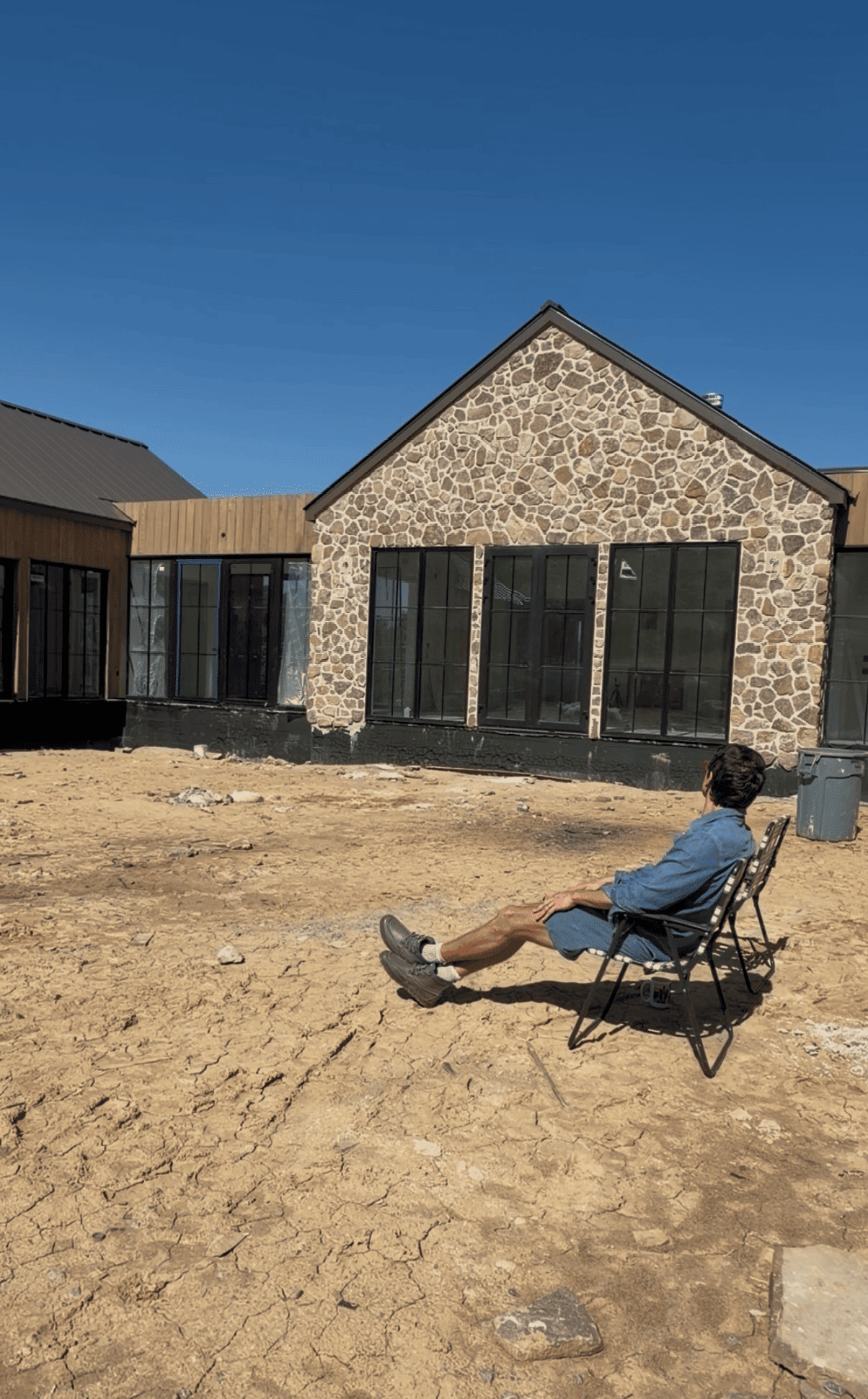
In the courtyard, sitting where the pool deck will be
