
I was re-reading a chapter in A Pattern Language called Pools of Light. It's the second-to-last "rule" in the book, 252 of 253.
If you have never read A Pattern Language, it's a banger - authored in 1977 by Berkeley Architecture Prof's Christopher Alexander & co. 253 linked design patterns or rules, from cities down to window seats, meant to help anyone build places that feel alive.
This is the A Pattern Language website, I can't find it in print but you can buy used copies.
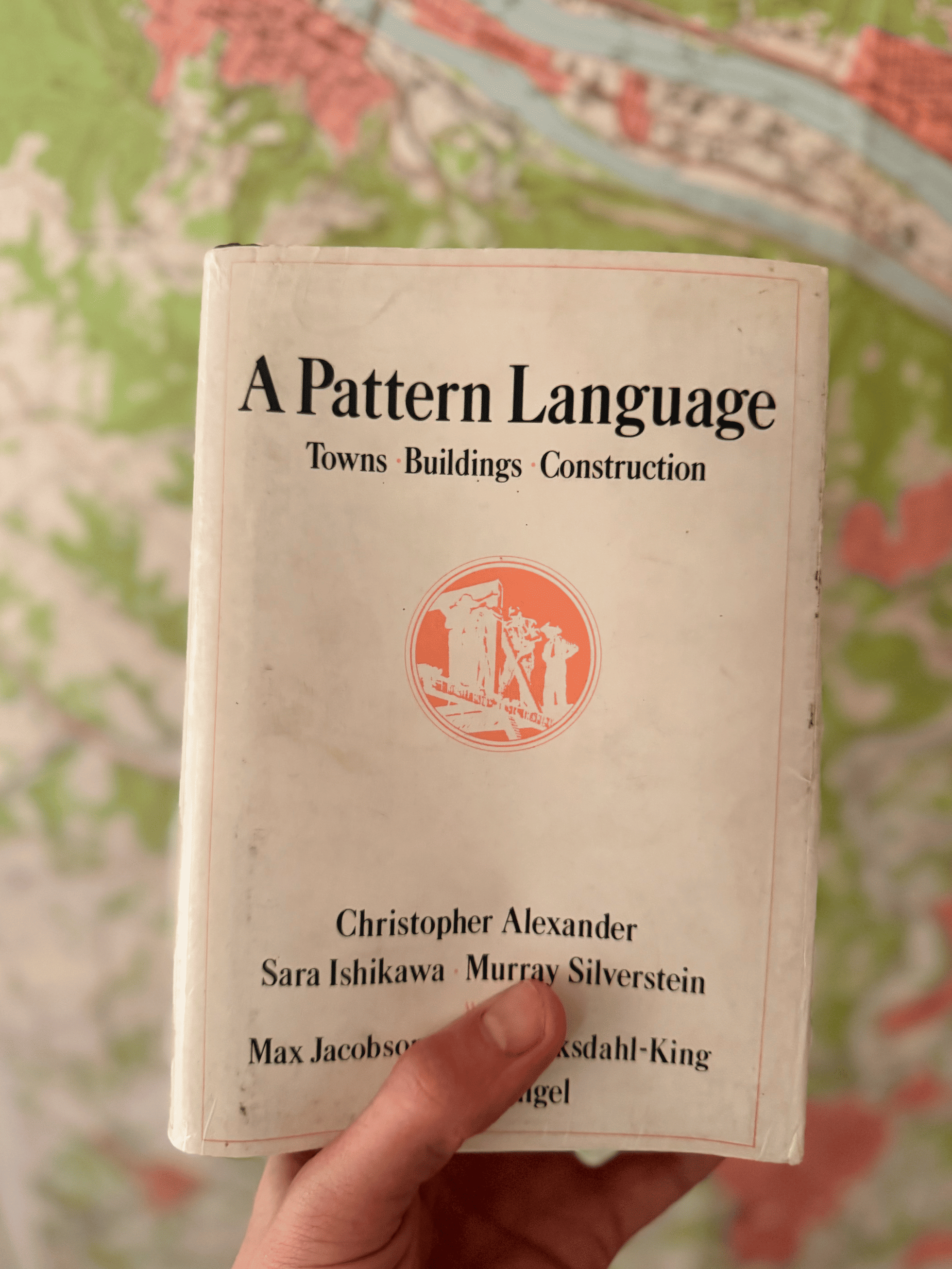
Ignore at your own peril
In Pools of Light, they call out the increasingly common lighting solution of their era - flat fluorescent lighting meant to "mimic the sky." This is a fool's errand, they say - first of all, you can't mimic the sky, because light is so often dappled by clouds and changes as the sun moves throughout the day.
One reason I love Alexander & his crew is that they are so people- and social-oriented in their architectural approach. Very humanist. Everything he writes is aimed squarely at community cohesion and human flourishing.
He writes:
"It is a fact of human nature that the space we use as social space is in part defined by light.
When light is perfectly even, the social function of the space gets utterly destroyed....
..if a group is in an area of uniform illumination, there are no light gradients corresponding to the boundary of the group, so the definition, cohesiveness, and "existence" of the group will be weakened."
This is spot on. Think about a dining room table with a chandelier - it creates a pool of light, maybe bouncing on the ceiling above and spilling down onto the table and chairs below. It draws everyone toward the heart of social activity at the table.
If you want to be social and be illuminated, you go towards the table. If you need a reprieve and some wallflower time, you move away into the outer, darker boundary.
As I was reading, I couldn't help but notice how sharply this analysis of lighting relates to the design theory I have long talked about: "enclosure." Jay Appleton developed a similar idea called prospect and refuge in 1975.
Essentially, any great space offers both open traffic areas and gathering/enclosed areas where furniture, architecture, lamps, etc. work together to create partially walled pockets of refuge.
Yet in so many spaces today, there is no central glowing magnet flame for all of us moths to hone in on. While it's no longer Alexander's 1970s fluorescent nightmare; it's been replaced by numerous nearly flat can puck lights that don't create a pool, but a flat, bright, even spread. Or LED strip lighting, which does the same thing.
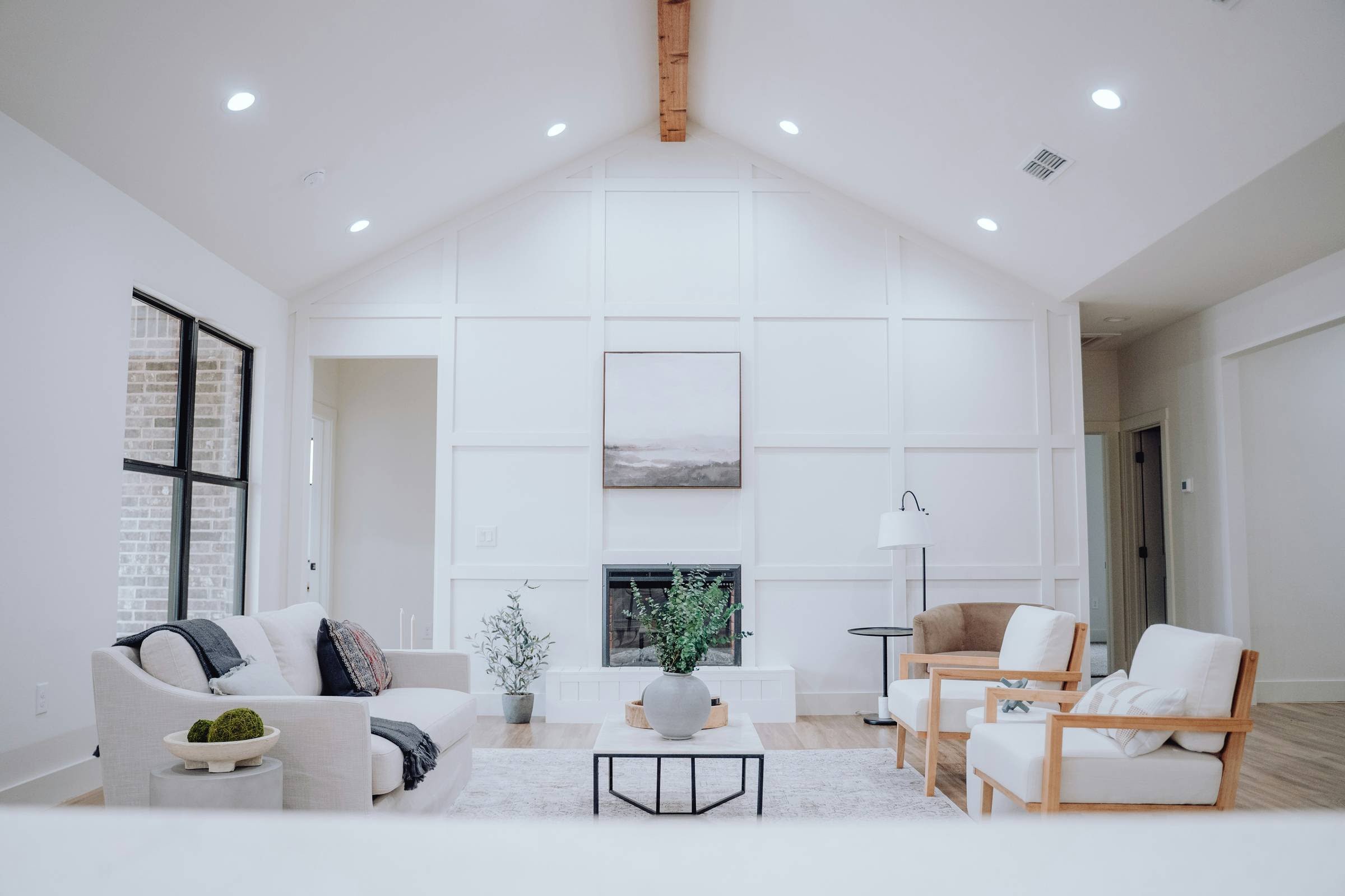
Do you want to gather here?
Great for retail, bad for gathering. Your house should not feel like Walmart.
One problem with overhead can lighting today is that the light source is very close to the trim, so the light spreads wide.
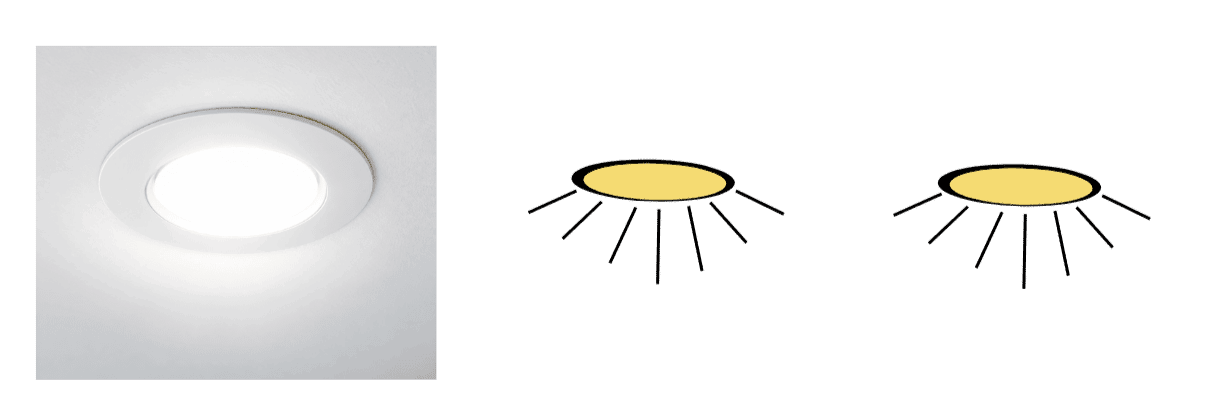
Wide beam flat modern cans, light source right against opening
I much prefer some older deeply recessed cans because the light source is much further back in the tube, creating a tighter, more defined pool of light.
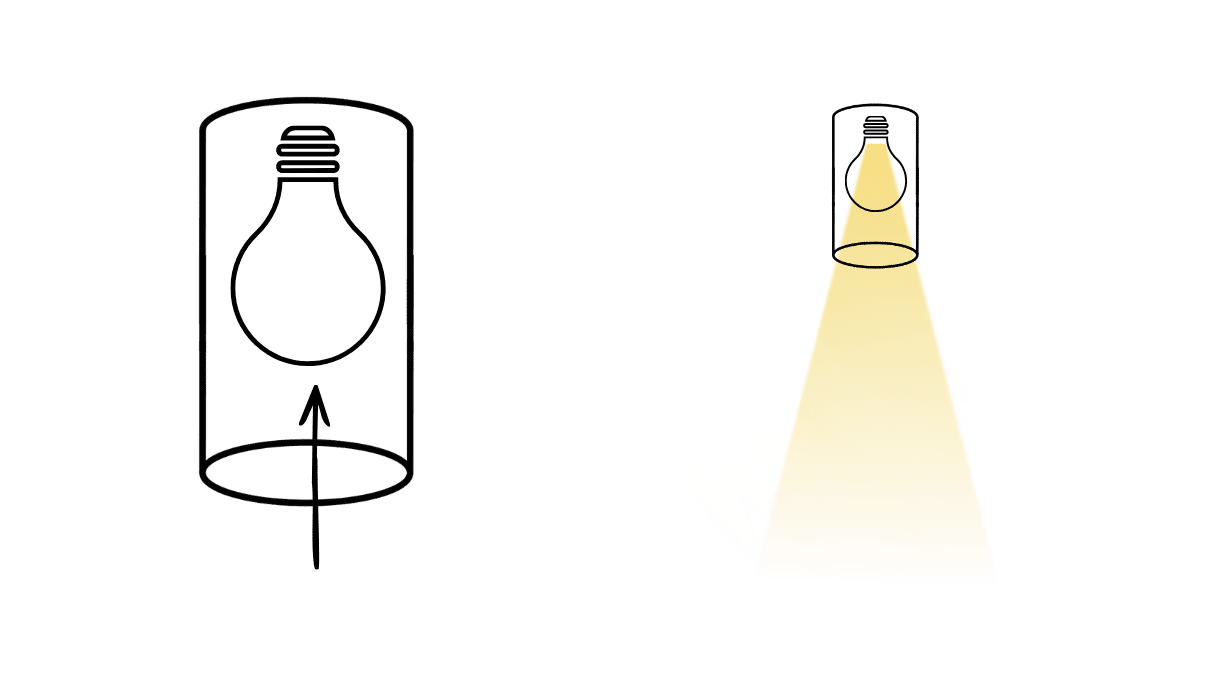
Older cans or spotlights with bulb recessed back from opening
Lighting is arguably the most powerful tool we have in interiors. What makes a space look great is having zones of light and dark - it creates mystery and drama and a desire to explore.
Our house is pretty dark at night, with certain moments illuminated. Whenever people come over in the evening, they immediately comment on it.
After copious use of assorted lamps, spotlights are one of my favorite ways to create this feeling in a space because the bulb is recessed deep in the tube, and you can use this tight beam to really highlight certain areas and features and wash walls with vignettes of light.
Yesterday I made this video about some of my favorite spotlights.
I particularly love the decorative Tate series designed by Marie Flanigan, part of the Visual Comfort Signature Series.
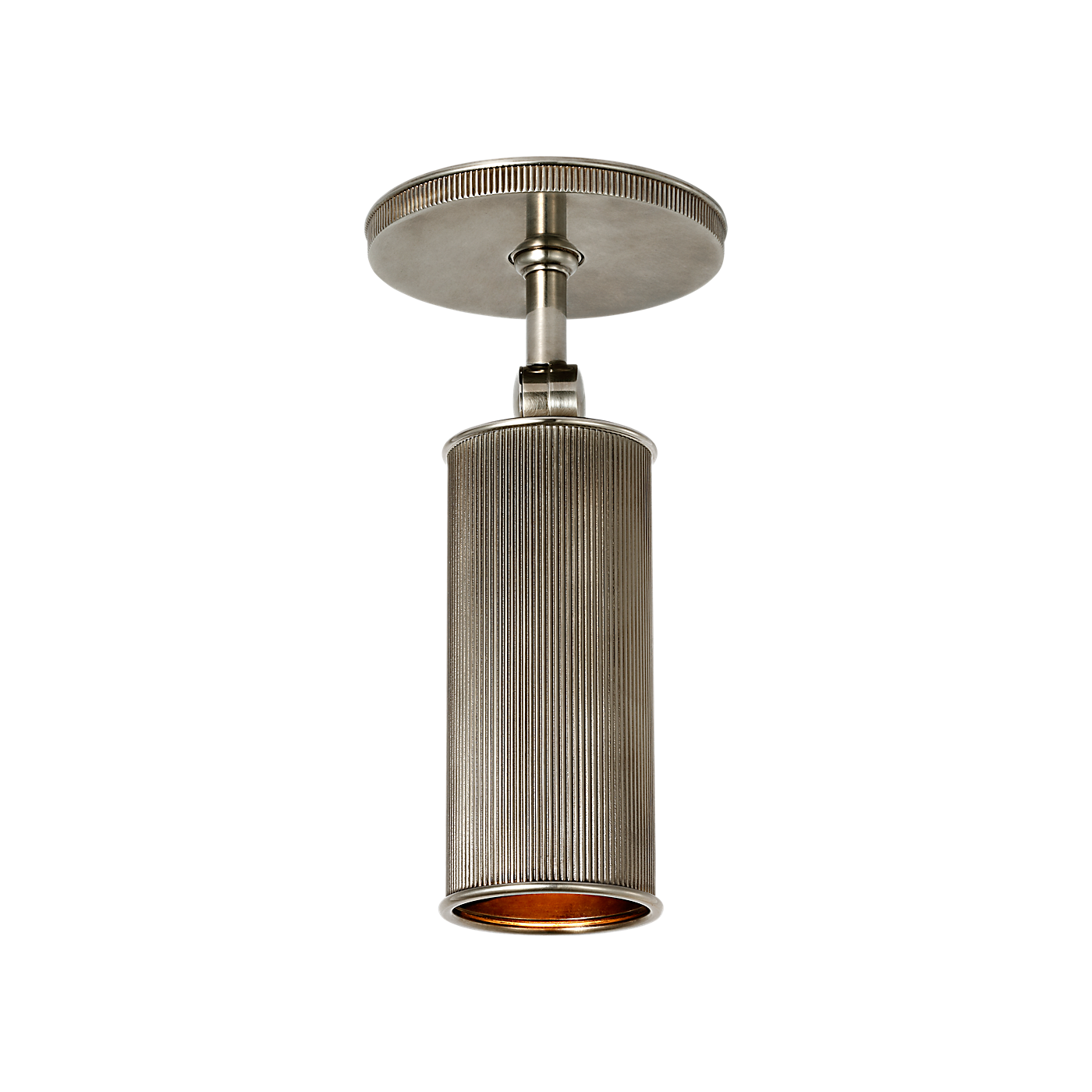
Tate
I have also mentioned Smile Lamp Works in the past for high-quality, economical brass and glass fixtures. We've used them in my home and across many different projects.
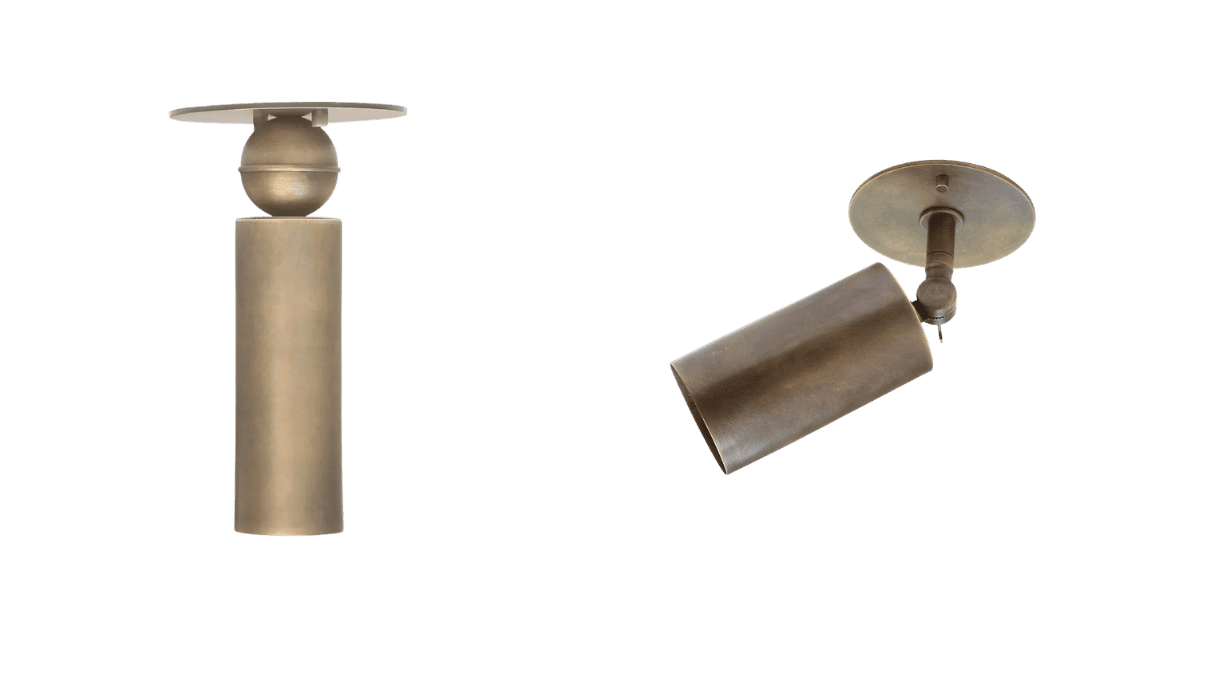
Smile Lamp Works
I could write about this all day, but my son has his first ever basketball game, and we are staging and tweaking Arrington Woods Lot 1 to get ready to list in 3 days, so unfortunately I am just out of time.
Have a great week and don't be afraid to lean into your moth instincts!
